
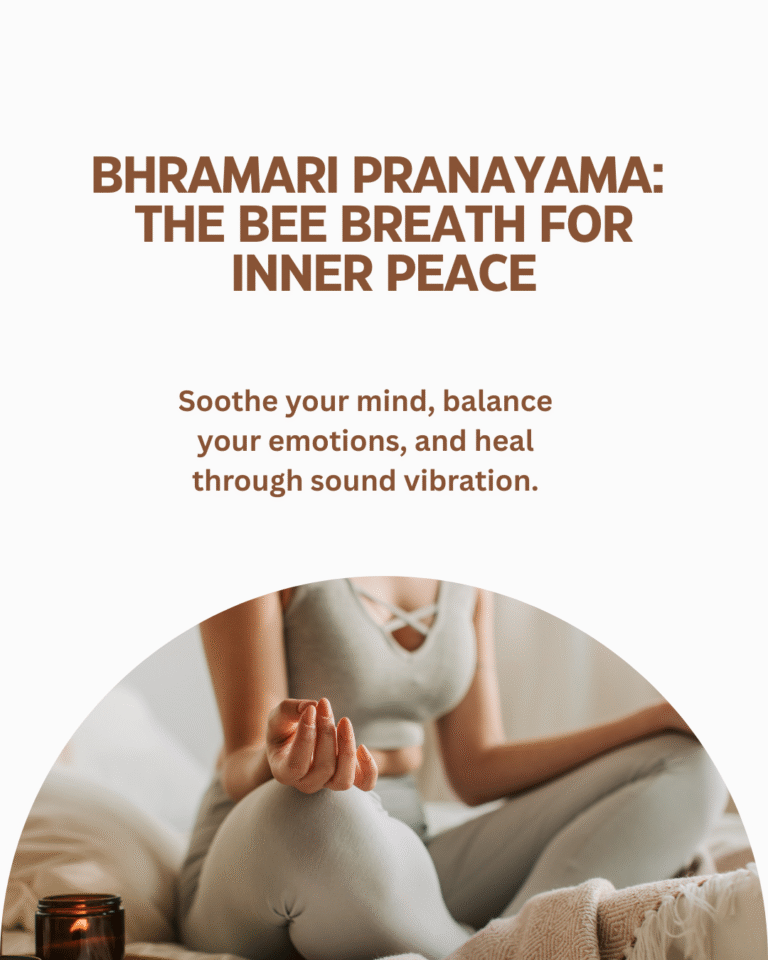
Bhramari Pranayama: The Bee Breath for Calm and Clarity
In today’s fast-paced world, stress and anxiety have become part of daily life. Ancient yogic practices, however, offer simple yet powerful techniques to restore peace and balance. One such practice is Bhramari Pranayama, also known as the Bee Breath.
The name Bhramari comes from the Sanskrit word Bhramar, meaning “bee.” During this pranayama, a gentle humming sound—similar to a bee’s buzzing—is produced, which calms the mind and relaxes the body.
What is Bhramari Pranayama?
Bhramari Pranayama is a breathing exercise in which you inhale deeply, close your ears and eyes, and exhale while making a humming sound. This vibration soothes the nervous system, reduces stress, and promotes inner peace. It is often practiced in yoga and meditation sessions to prepare the mind for deep relaxation.
Benefits of Bhramari Pranayama
Mental & Emotional Benefits
Relieves Stress and Anxiety – The humming sound activates the parasympathetic nervous system, creating relaxation.
Improves Concentration – Helps clear the mind and sharpen focus.
Enhances Sleep Quality – A natural remedy for insomnia.
Reduces Irritability and Anger – Promotes emotional stability.
Physical Benefits
Lowers Blood Pressure – Calms the cardiovascular system.
Improves Hearing and Voice – The vibrations massage the inner ear and throat.
Eases Headaches & Migraines – Reduces tension in the head region.
Boosts Lung Health – Strengthens the respiratory system.
Spiritual Benefits
Activates the Ajna (Third Eye) Chakra – Enhances awareness and intuition.
Helps in Meditation – The sound creates a deeper sense of inward focus.
How to Practice Bhramari Pranayama
Sit Comfortably – In Padmasana, Sukhasana, or on a chair with spine straight.
Close Eyes & Relax – Take a few deep breaths.
Use Shanmukhi Mudra (Closing Gesture):
Place your thumbs on your ears.
Index fingers above the eyebrows.
Middle fingers on the closed eyes.
Ring fingers on the nostrils.
Little fingers on the lips/chin.
(Beginners may simply close the ears with thumbs.)
Inhale Deeply – Through the nose.
Exhale with Humming Sound – Produce a steady “Mmmm…” sound like a bee.
Repeat – 5–10 rounds for beginners. Gradually increase as comfortable.
Precautions
Practice on an empty stomach.
Avoid if you have severe ear infections, epilepsy, or extremely high blood pressure.
Pregnant women should practice under guidance.
Keep the humming sound soft and steady, not forced.
FAQs on Bhramari Pranayama
1. How long should I practice Bhramari daily?
Start with 5 minutes and gradually increase to 10–15 minutes daily.
2. Can beginners do Bhramari?
Yes, it is safe and simple for beginners of all ages.
3. What is the best time to practice?
Early morning (Brahma Muhurta) or evening in a quiet environment.
4. How many times should Bhramari be done?
5–7 rounds daily are effective. Advanced practitioners may increase to 21 rounds.
5. Does Bhramari help with anger and anxiety?
Yes, the humming sound relaxes the nervous system and balances emotions.
Conclusion: Find Peace Through the Buzz
Bhramari Pranayama is one of the simplest yet most powerful yogic breathing practices. With just a few minutes daily, you can reduce stress, calm your mind, and improve overall well-being.
The gentle humming not only connects you to your inner self but also creates vibrations that heal and balance the body.
Begin your day with a few rounds of Bee Breath—and carry that peace with you throughout the day.