
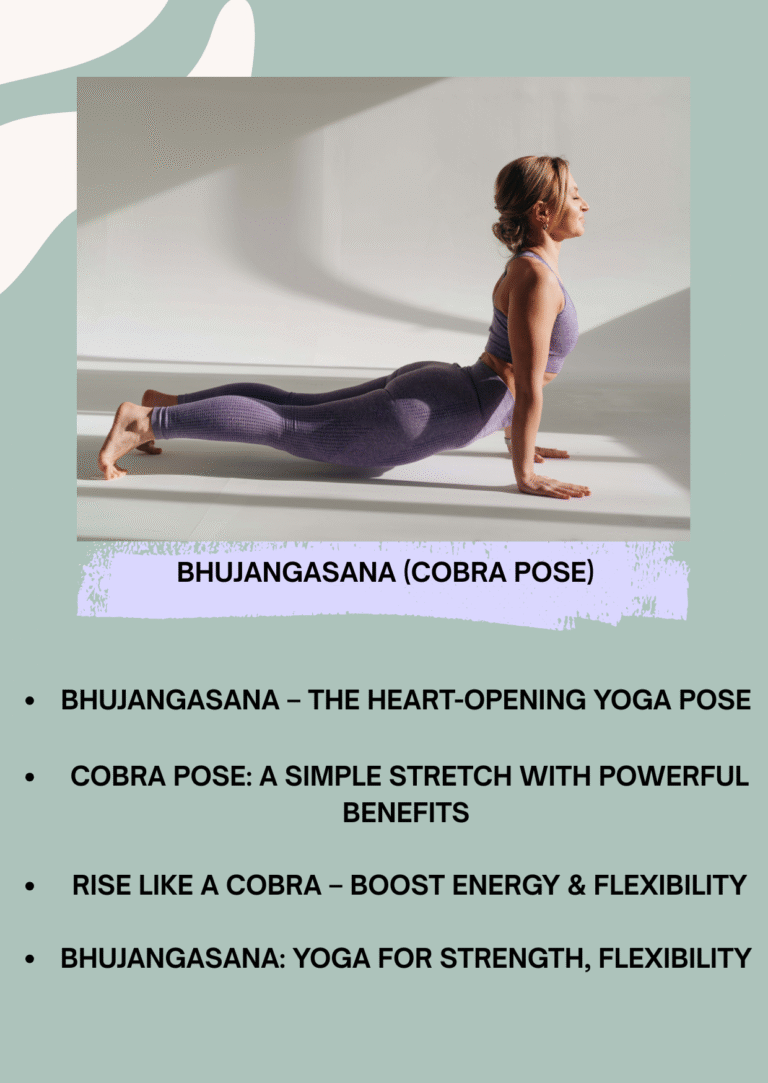
Bhujangasana (Cobra Pose)
Bhujangasana, also known as the Cobra Pose, is one of the most popular yoga postures practiced worldwide. Derived from the Sanskrit word “Bhujanga” meaning serpent and “Asana” meaning pose, this posture resembles the raised hood of a cobra. It is a part of the Surya Namaskar (Sun Salutation) sequence and holds a special place in Hatha Yoga.
This asana is highly recommended for improving spinal flexibility, strengthening the back muscles, and boosting energy levels. If practiced regularly with correct technique, Bhujangasana can bring physical, mental, and emotional balance.
How to Do Bhujangasana (Step-by-Step Guide)
Step 1: Starting Position
Lie flat on your stomach with legs stretched out.
Keep your feet together, toes pointing backward.
Place your palms beside your chest with elbows close to the body.
Step 2: Inhale and Lift
Slowly inhale and press your palms into the floor.
Raise your head, chest, and upper abdomen off the ground.
Keep your navel touching the floor while arching your back.
Step 3: Hold the Position
Look upward or slightly forward.
Ensure your shoulders are rolled back and away from the ears.
Hold the posture for 15–30 seconds, breathing normally.
Step 4: Release
Exhale and gently lower your chest and head back to the mat.
Relax in Makarasana (Crocodile Pose) or Balasana (Child’s Pose) before repeating.
Benefits of Bhujangasana (Cobra Pose)
1. Strengthens the Spine
Bhujangasana is one of the best yoga poses for spinal flexibility and strength. It stretches the spine deeply, relieving stiffness and improving posture.
2. Reduces Back and Shoulder Pain
By activating back muscles and opening the chest, Cobra Pose relieves back pain, neck stiffness, and shoulder tension, especially for those with desk jobs.
3. Improves Digestion
The gentle pressure on abdominal organs during Bhujangasana helps stimulate digestion, reduce constipation, and improve appetite.
4. Enhances Lung Capacity
As the chest expands in this pose, it allows deeper breathing, improving lung capacity and helping with respiratory issues like asthma.
5. Reduces Stress and Fatigue
Cobra Pose opens the heart and improves oxygen flow, leading to stress relief, reduced anxiety, and mental relaxation.
6. Aids in Weight Loss
Regular practice of Bhujangasana helps burn belly fat, tone abdominal muscles, and improve metabolism.
Precautions and Contraindications
While Bhujangasana is beneficial, it should be avoided in certain conditions:
Pregnant women should not practice this pose.
Avoid if you have severe back injury or recent surgery.
People with hernia or ulcers should consult a doctor before practicing.
Do not overstretch beyond your comfort zone.
Tips for Beginners
Keep elbows slightly bent if you feel strain in the lower back.
Practice slowly; do not rush into a deep backbend.
Focus on engaging your back muscles instead of just pressing the arms.
Practice early morning on an empty stomach for best results.
Common Mistakes to Avoid
Overarching the lower back without engaging the core.
Lifting the pelvis off the floor instead of keeping it grounded.
Holding breath while performing the pose.
Forcing the neck backward, which may cause strain.
Variations of Bhujangasana
Ardha Bhujangasana (Half Cobra Pose): Lift the chest slightly using forearms for beginners.
Sphinx Pose: Rest on forearms, keeping the back in a gentle curve.
Advanced Cobra: Deepen the stretch by straightening arms fully and holding longer.
Best Time to Practice Cobra Pose
Early morning is the ideal time to practice Bhujangasana on an empty stomach.
If mornings are not possible, practice in the evening after a 4–5 hour gap from meals.
Yoga Sequence with Bhujangasana
Bhujangasana can be practiced as a standalone posture or as part of yoga flow:
Start with Cat-Cow Pose (Marjariasana) for spine flexibility.
Move into Bhujangasana for a deep backbend.
Relax in Child’s Pose (Balasana) afterward for balance.
Frequently Asked Questions (FAQs) on Bhujangasana
1. What is Bhujangasana also known as?
Bhujangasana is commonly known as the Cobra Pose because the final position resembles the raised hood of a cobra.
2. Who should not practice Bhujangasana?
People with pregnancy, hernia, recent abdominal surgery, severe back injury, or ulcers should avoid this pose unless advised by a doctor.
3. How long should I hold Cobra Pose?
Beginners can hold the pose for 10–15 seconds, while advanced practitioners can stay for up to 1–2 minutes with steady breathing.
4. Can Bhujangasana reduce belly fat?
Yes, regular practice of Bhujangasana helps tone abdominal muscles, boost metabolism, and reduce excess belly fat when combined with a healthy lifestyle.
5. Is Bhujangasana good for back pain?
Yes, it strengthens spinal muscles, improves posture, and relieves mild back pain. However, people with severe spinal issues should practice under expert guidance.
Conclusion
Bhujangasana (Cobra Pose) is a powerful yet simple yoga posture that brings numerous health benefits – from strengthening the spine and improving digestion to reducing stress and enhancing energy. When practiced with awareness and correct alignment, it can transform both body and mind.
Whether you are a beginner or an advanced yoga practitioner, including Bhujangasana in your daily yoga routine will help you stay strong, flexible, and stress-free.